
Should we Boycott DC Comics?
Do our voices matter?

I wasn’t going to say anything about this www.dcsowhite.com initiative, because I make my own comics.
But then I saw this video.
I thought… “There's NO good reason that Mr Terrific didn't instantly get an ongoing after Superman.” And “Miles, Storm, Vixen, Riri, Static, Cyborg, Brother Voodoo , and Naomi should all have books right now.” I posted on my Facebook about Mike Watson’s comic, which is what started this stream of thoughts.
Should We Boycott DC Comics Over #DCSoWhite?
Over the last few weeks I’ve seen a familiar kind of comics discourse pop up in my feeds, but this time it hit especially close to home. Fans are circulating the hashtag #DCSoWhite and a new boycott call, #DCBlackout, over DC Comics’ lack of an ongoing, Black-led solo series in the main DC Universe. As someone who both reads comics and makes comics with Black characters, I’ve been asking myself a simple but uncomfortable question:
Should we boycott DC?
I don’t come to this question as a detached critic. I come to it as a creator who feels the absence of Black-led series at the Big Two and, at the same time, sees an abundance of Black-led stories thriving in the indie space.
I’m proud of the people speaking up. I think protest is healthy. But I also want to make sure our outrage turns into something that actually builds power for Black creators and Black readers, not just a few days of spicy social media posts.
What #DCSoWhite and #DCBlackout Are Saying
First, some context for anyone who isn’t living in comics Twitter, TikTok, or Facebook groups.
Fans and journalists have documented that DC has gone more than 1,200 days without publishing an ongoing, main-continuity solo series led by a Black hero in its core line.
Coverage and commentary, including pieces like “DC Comics, Blinded by Whiteness” at The Beat, argue that this gap is part of a longer pattern in how often DC starts — and quietly ends — books with Black leads.
In response, organizers behind #DCSoWhite have launched “Phase 2”: a campaign called #DCBlackout, urging fans to remove DC titles from their pull lists until the company announces a new Black-led ongoing and makes concrete commitments on Black representation.
A companion petition, “#DCSoWhite: End the Black Superhero Drought,” lays out specific demands, including a sustained Black-led solo, better support for existing Black characters, and more attention to Black talent behind the scenes.
In other words, this isn’t just vague frustration. People have done the homework, pulled the receipts, and turned that data into a focused call to action.
Why Protest Matters (And What Boycotts Can Actually Do)
I want to start by saying this clearly: I am proud of the people organizing around #DCSoWhite and #DCBlackout.
It takes energy to look at something you love and say, “This isn’t good enough.” It takes even more to turn that feeling into petitions, videos, threads, and coordinated campaigns instead of just quiet disappointment.
There’s a reason boycotts keep coming up as a tactic:
They create visibility. When a movement names a clear problem — like “1,200 days without a Black-led ongoing” — and ties it to a concrete action, it becomes harder for a publisher to wave it away as random noise.
They send a market signal. If pull-list numbers and sales dip during a visible boycott window, that’s data executives and shareholders understand in a way they might not understand a hashtag.
They show capacity. Once a community shows it can organize a boycott, it also shows it can organize support, preorders, and buzz for the things it does want.
At the same time, I think it’s honest to name the limits and risks:
Collateral impact. The people who may feel the pinch first are freelancers, newer creators, and marginalized voices already working at DC, many of whom don’t control greenlighting decisions. And the Comic Book stores we actually buy from.
Short corporate memory. Big companies are very good at waiting out outrage. Sometimes they add one or two titles, point to them as proof of change, and then quietly let them slip away once the spotlight moves.
No plan B. A boycott that only says “don’t buy DC” without a matching “here’s where to redirect your support” runs the risk of ending with less money for corporate comics and no meaningful gain for Black creators.
To that last part. In Ernie’s video he did say, put the money you WERE going to spend on DC into an indie title, so that’s a solid option in my opinion. A good start but not a magic wand.
As a Black Creator, Here’s How I See It
This is the part where I have to speak for ME personally.
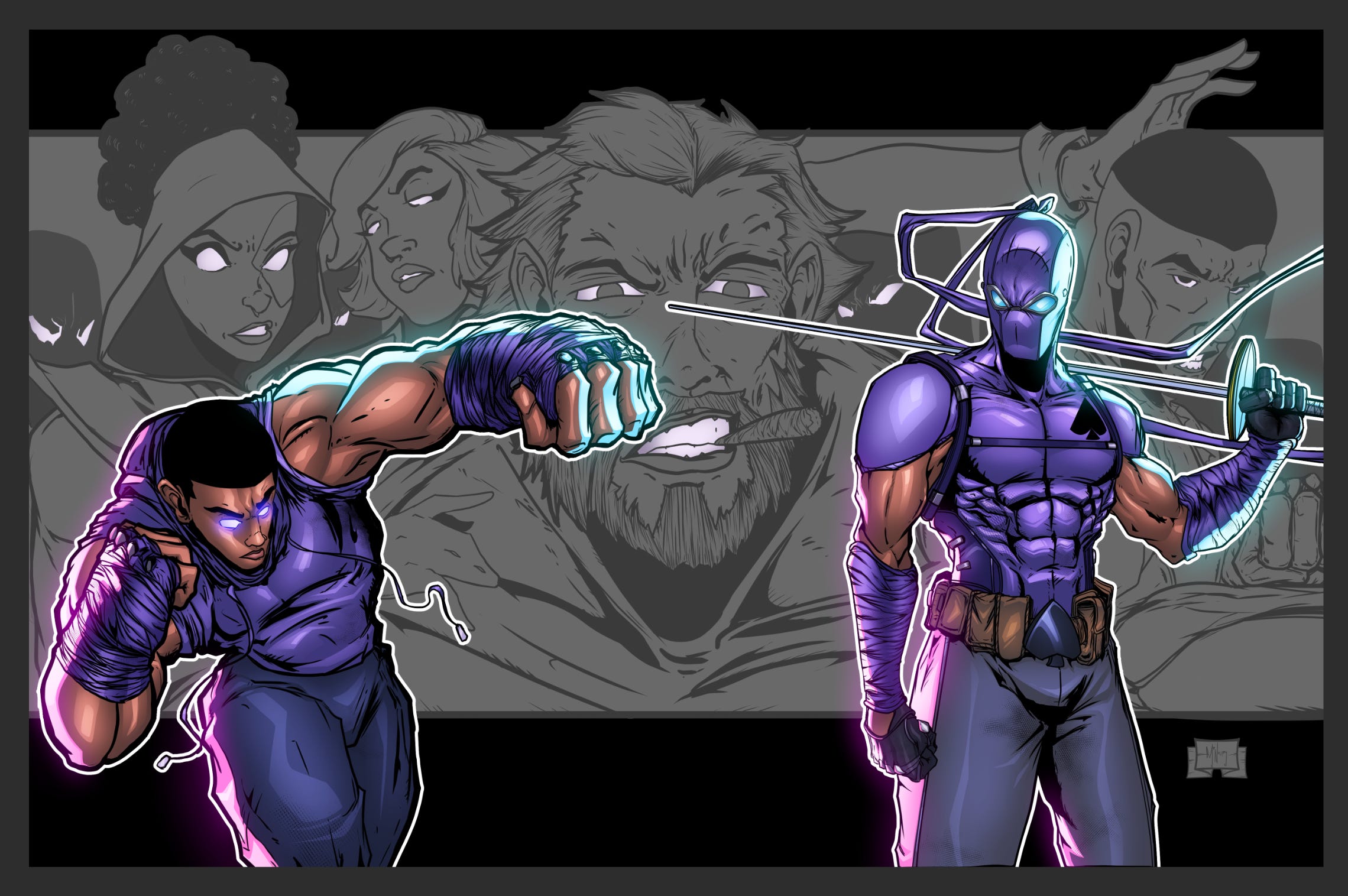
I make comics with Black characters. My superhero Aceblade isn’t an abstract idea — he’s a book I’ve been carrying to conventions, Kickstarters, and shop signings, trying to put a purple dude into the hands of readers who want him. I know the creators of other Black-led books not because I read about them, but because I’ve shared tables, livestreams, and late-night streams with them.
When I hear “1,200 days without a Black-led ongoing at DC,” I feel that in two ways at once:
As a fan, it’s frustrating. You shouldn’t have to dig through digital-only minis, anthologies, or one-shots to find Black heroes in 2026.
As a creator, it weirdly confirms something I live every day: there’s a gap between what the big publishers are willing to sustain and the stories many of us are already telling on our own.
So when people ask, “Should we boycott DC?” my honest answer is:
I think it’s good that you’re even asking. It means you care enough to attach stakes to representation.
A boycott can be part of the answer. But for me, it only really matters if we pair it with something else: a clear commitment to support Black-led comics that already exist.
Blackout DC, Light Up Black Indie
Here’s the part I don’t want anyone to miss:
If you’re going to step back from DC for #DCBlackout, I hope you also step toward something.
There are so many Black-led indie comics out right now that deserve the kind of love and consistency we’ve been begging the majors to show:
Aceblade (my series) – A Superhero Vigilante in purple, navigating power, responsibility, and community, built from the ground up at 4th Wall Productions.
Hotshot by Michael Watson – A long-running Black superhero series with real momentum, currently pushing forward through new Kickstarter campaigns for its latest chapters.
Scarlet Ranger by Ro Lamb – A Black-led costumed hero whose story leans into responsibility, legacy, and what it means to protect your community.
PSION by Mark Bandy – Superheroics with a strong sci-fi twist, placing Black characters at the center of high-concept storytelling.
Dead of Night by Simone Warwick – Horror adventure featuring Black and Queer Characters with heart.
And that’s just the tip of the iceberg. Fans often shout out titles like Is’nana the Were-Spider, Crescent City Monsters, and other Black indie projects in the same breath when they talk about what they wish they saw more of on the shelves.
So if you’re pausing your DC pull list, here’s what I’d love to see instead:
Take the money you’d spend on one DC book each month and put it toward a Black-led indie.
Back a Black-led Kickstarter — for example, Michael Watson’s current Hotshot campaign — during the #DCBlackout window.
Post about the Black comics you’re reading with the same intensity you post about what DC isn’t doing.
When you share #DCSoWhite content, pair it with links to at least one Black creator or project you want people to discover.
If a boycott is about turning off one light, this is about turning several others on.
So… Should You Boycott?
I’m not here to tell anyone how to spend their money, but I can tell you how I’m thinking about mine.
If you choose to join #DCBlackout and pull DC books from your list for a while, I understand that. Given the 1,200-day drought for a Black-led ongoing and the company’s own history, it’s a reasonable response.
If you decide not to boycott, but you still feel the problem deeply, I believe you can still be part of the solution by intentionally supporting Black-led books, creators, and publishers.
For me, the real question isn’t “boycott or not?” It’s:
“What are we building with this energy?”
I want a world where DC and Marvel are held accountable for the stories they choose to tell and the ones they choose to ignore. I also want a world where Black creators don’t have to wait for those companies to validate us before we can tell our stories and reach our readers.
So if you’re asking whether we should boycott DC, my answer is:
Maybe. If that’s what your conscience and your community are calling you to do.
Definitely yes to something else: boycott hopelessness. Invest in Black stories. Seed the future you want to read.
Because at the end of the day, DC can decide when they end a drought. We can decide what we grow in the meantime.
If you want to put your support behind a project like mine, I hope you’ll check out Aceblade issue 10 on June 23rd or come see us at HeroesCon in Charlotte NC, or FiveStar Comicon in Dayton Ohio the two weeks before!
https://www.kickstarter.com/projects/dannyjquick/aceblade-immortal-the-omnibus-and-a-short-film
Until Next Time, Stay Vigilant My Friends!

DC has been working overtime to prioritize progressive politics. It's never enough. If you boycott them now, you're just demonstrating why attempting to placate this reader base is a waste of time.
Because at the end of the day, DC can decide when they end a drought. We can decide what we grow in the meantime. - Great quote